Research status: Desk research, not personally tested. Ranking and product details were checked on 7 September 2026.
The short answer
In tropical climates like Malaysia and Indonesia, dehydration is frequently worsened by continuous exposure to dry air conditioning, while high outdoor humidity makes heavy occlusive creams feel suffocating and sticky. The most practical Japanese solution is a ceramide-restoring watery lotion (Keshousui).
On @cosme's lotion rankings updated in August 2026, barrier-focused watery lotions consistently hold leading positions among consumers dealing with seasonal flaking, stinging, and micro-inflammation. However, treat rankings as a dated popularity snapshot—not proof of clinical efficacy, allergy safety, or universal tolerance.
The key formulation distinction is between synthetic pseudo-ceramides (like Kao's bio-compatible Cetyl-PG Hydroxyethyl Palmitamide in Curél) and bio-identical human-type ceramides (such as the 5-ceramide complex in Matsuyama Hadauru). Both reinforce intercellular lipid matrices without depositing heavy petrolatum films that trap sweat in tropical climates.
Three bottles, three barrier strategies
1. Curél Moisture Facial Lotion III (Enrich)
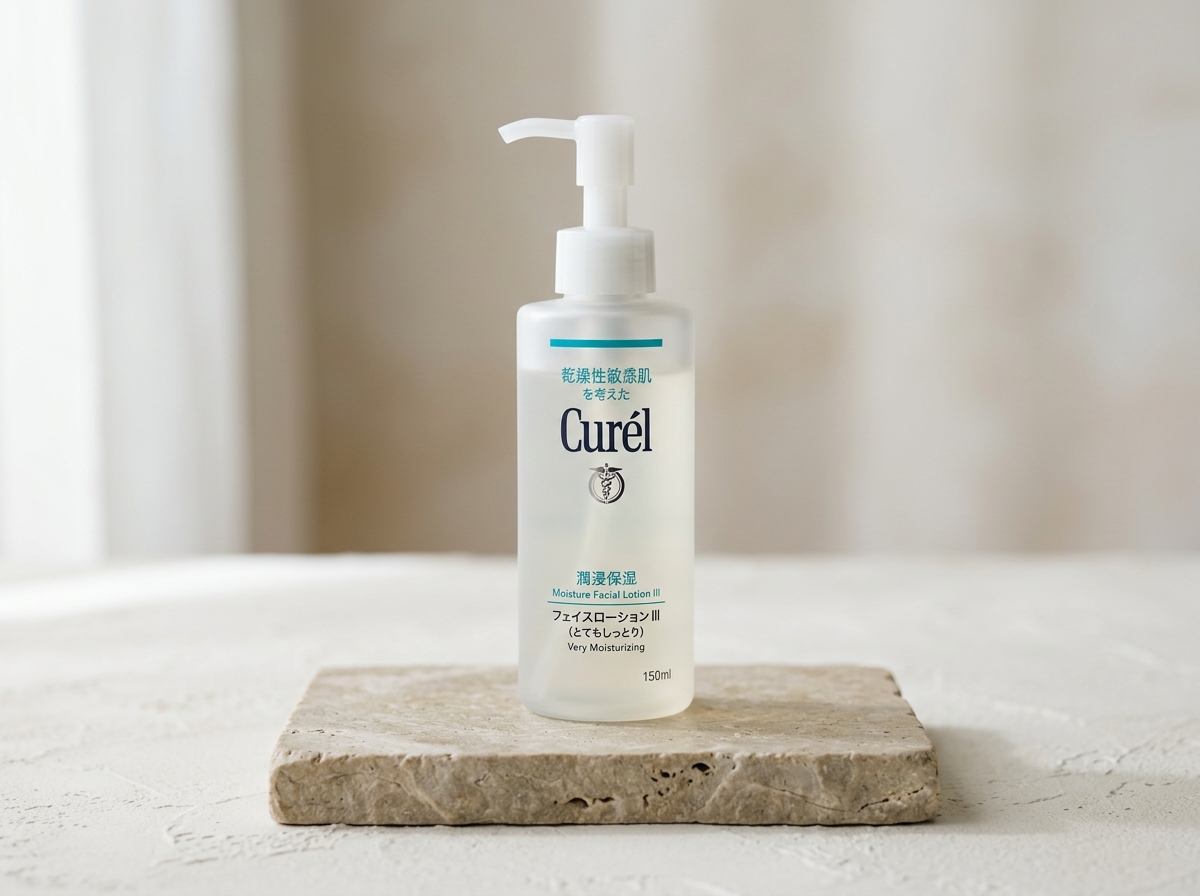
Curél's official Kao directions specify using three to four pumps on clean palms. The formula uses Kao's proprietary synthetic pseudo-ceramide technology combined with eucalyptus extract to replenish depleted intercellular lipids in sensitive, ceramides-deficient skin.
Unlike Western barrier creams that rely heavily on shea butter or petrolatum, Lotion III has a watery texture that absorbs rapidly without surface tackiness. Avoid aggressive circular rubbing: press gently with cupped hands from the center of the face outward.
Official price benchmark: RM82 / Rp 295.000 / $22 (150 mL) · View on Shopee Malaysia.
2. Matsuyama Hadauru Moisturizing Infusion (Balancing / Deep Moist)
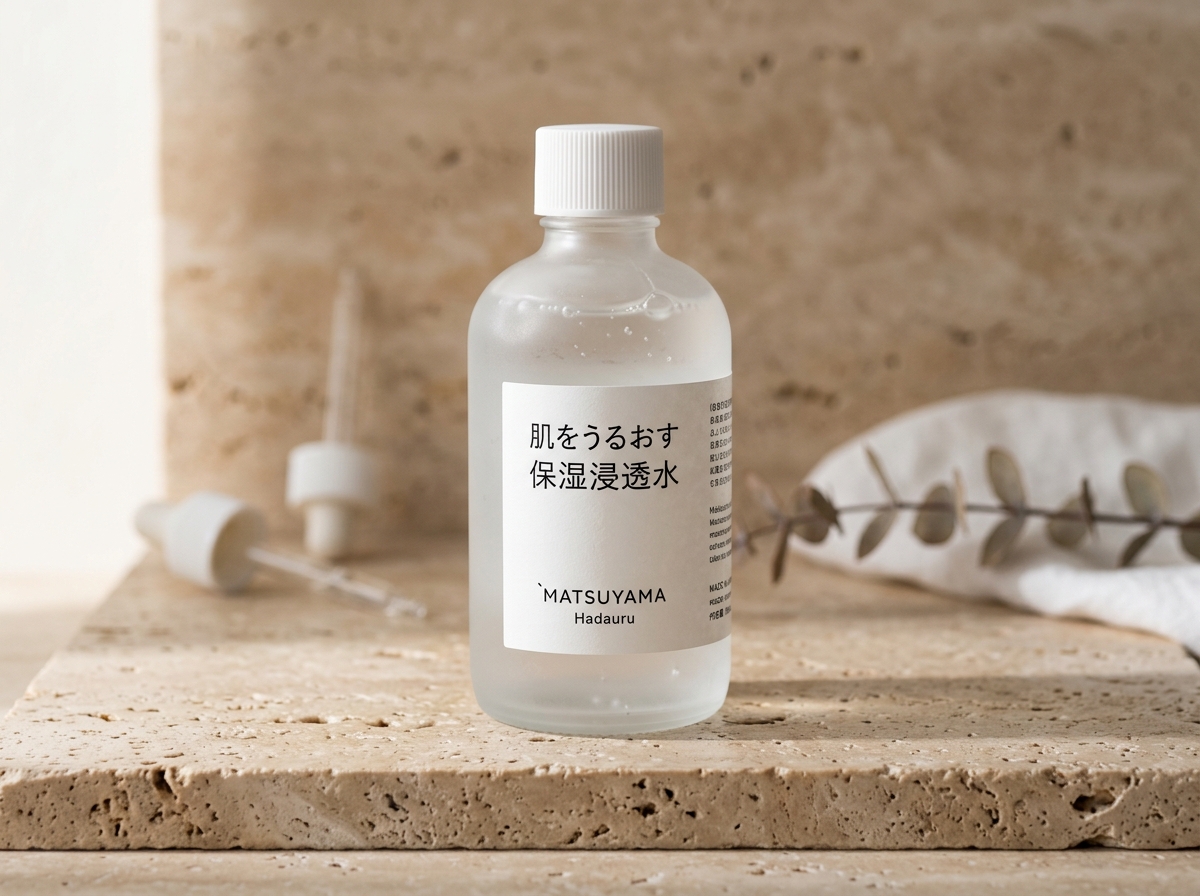
Matsuyama directs users to dispense a coin-sized amount (approximately 2.5 cm diameter) into clean palms, warm it briefly between hands, and gently press it across facial contours.
The formulation centers on five human-type ceramides (Ceramide EOP, Ceramide NG, Ceramide NP, Ceramide AG, Ceramide AP) extracted and structured to mirror natural human skin lipids, combined with fermented soybean extract and amino acids. It is completely free of ethyl alcohol, parabens, synthetic fragrance, and colorants.
Official price benchmark: RM92 / Rp 330.000 / $24 (120 mL) · View on Shopee Malaysia.
3. CareCera AP High Moisture Lotion
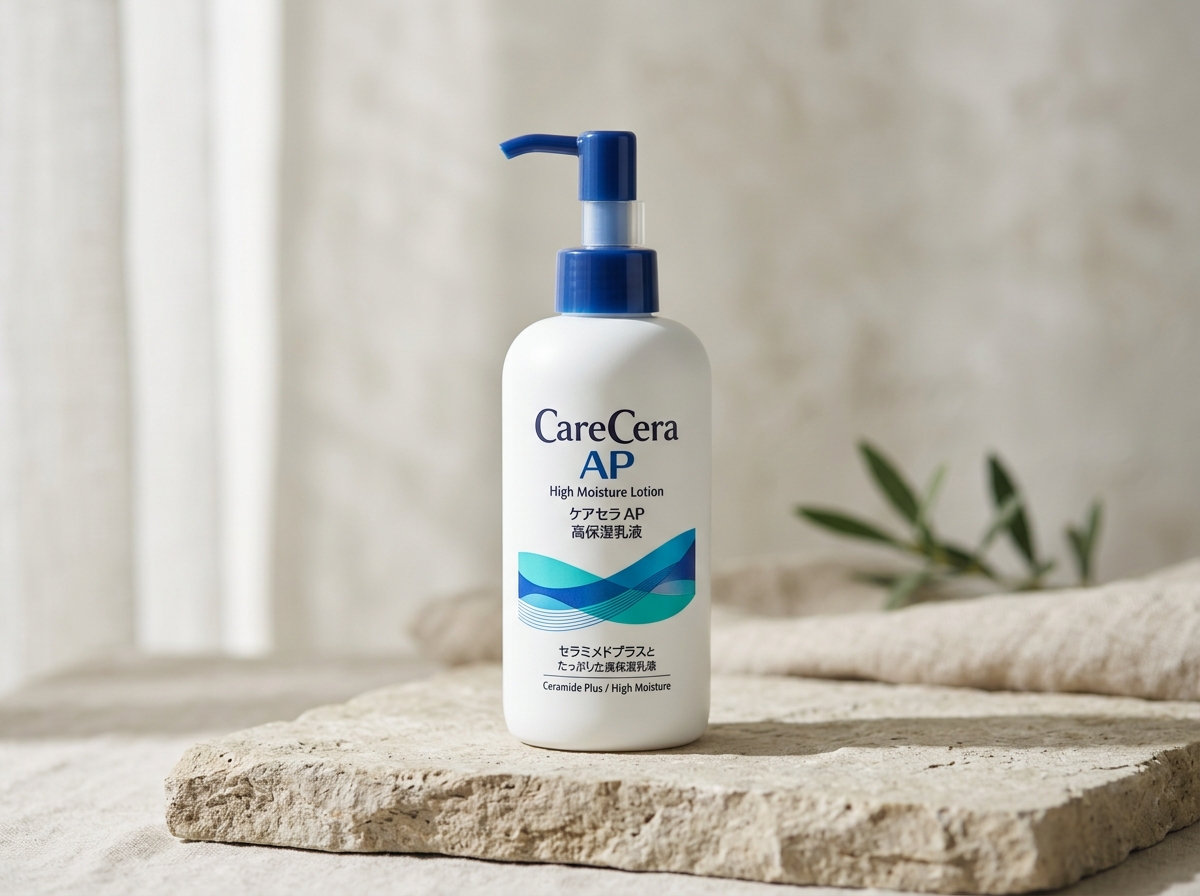
Rohto's official instructions recommend taking an appropriate amount (about one to two pumps) and smoothing it gently over the face and neck after cleansing.
CareCera AP contains eight naturally derived multi-ceramides (including Ceramide 1, 2, 3, 6II, and EOS) together with peptide bio-technology (Oligopeptide-24). While slightly more viscous than Matsuyama, it is engineered specifically for compromised skin experiencing micro-flaking or mild burning from over-exfoliation.
Official price benchmark: RM85 / Rp 310.000 / $20 (200 mL) · View on Shopee Malaysia.
The science: Pseudo-ceramide vs. Human-type ceramide
The human stratum corneum is composed of approximately 50% ceramides, 25% cholesterol, and 15% free fatty acids. When this delicate ratio is disturbed by aggressive cleansing or prolonged dry air, Trans-Epidermal Water Loss (TEWL) accelerates.
- Pseudo-Ceramides: Synthetic analogues engineered to mimic the physical lamellar phase behavior of natural ceramides. Studies from Kao demonstrate that Cetyl-PG Hydroxyethyl Palmitamide penetrates stratum corneum inter-corneocyte spaces, reducing barrier disruption.
- Human-Type Ceramides: Identical stereochemical structures to human ceramides (EOP, NP, AP). They integrate into damaged lipid bilayers and help retain water within deeper corneum layers.
Evidence limitation: Applying a ceramide-rich lotion does not guarantee instantaneous barrier repair. Topical application provides building blocks and temporary sealing; it does not replace endogenous lipid synthesis or cure underlying eczema.
Technique & routine guidance: The 60-second cushion
Applying a watery ceramide lotion correctly in warm, humid climates requires unlearning aggressive skincare habits:
- Press, never rub: Frictional rubbing shears delicate barrier lipids and aggravates irritated facial skin. Dispense the measured amount into your palms and press firmly and calmly against forehead, cheeks, and chin.
- The 60-second cushion: Wait 45 to 60 seconds after application. You will feel the initial watery slip transition into a plump, supple cushion without surface tackiness.
- Layering sequence: Cleanser -> Watery Ceramide Lotion -> Lightweight Emulsion (Nyueki) or Gel -> Sunscreen. If using active acids or retinoids, apply them after the ceramide lotion has dried to minimize penetration irritation.
Layerwise climate note: Tropical AC dehydration
In Kuala Lumpur and Jakarta, skin experiences extreme environmental whiplash: stepping from 32°C outdoor heat with 85% humidity directly into an air-conditioned room at 22°C and 50% humidity.
This rapid transition draws water out of unprotected skin cells while leaving sebum and perspiration on the surface—creating the illusion of "oily skin" that is fundamentally dehydrated underneath. Heavy Western barrier creams often trigger breakouts in this climate, whereas Japanese ceramide watery lotions restore lipid integrity without clogging pores.
In the United States, seasonal heating during autumn and winter strips ambient moisture; layering this watery lotion beneath a ceramide emulsion provides essential double-tier hydration.
Seven-day observation checklist
For your first week with a new ceramide lotion, monitor four specific indicators:
- Midday AC comfort: Note whether your cheeks feel tight or itchy after four hours in an air-conditioned room.
- Application comfort: Verify that application produces no tingling or burning sensation, even around the delicate eye-contour area.
- Sunscreen compatibility: Check for pilling or rolling at the hairline and jawline 15 minutes after applying your daily sunscreen.
- Pore clarity: Ensure no small white congestion bumps develop along the nasal folds or chin after seven consecutive days.
Stop-use and medical boundaries
Cosmetic watery lotions support everyday barrier hygiene; they are not medicines. If your skin exhibits open lesions, persistent peeling, severe erythema, burning, or oozing, discontinue use immediately. Consult a board-certified dermatologist for targeted medical treatment.